
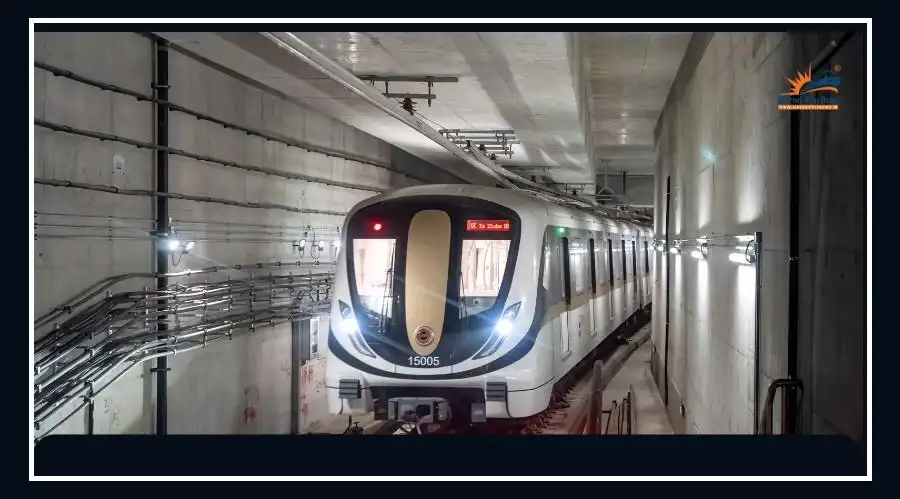

GST E-Way Bill Update brings an important change for businesses and transporters in India, with metro rail now included as an official mode of transportation in the GST e-way bill system.
The move allows companies to record goods transported through metro networks while generating and updating e-way bills.
The Goods and Services Tax Network (GSTN) introduced the facility following a government notification issued on October 26, 2026.
The new transport option became effective from November 1, 2026, and was made available to users accessing the GST portal through its web interface.
With this addition, the e-way bill system now recognises five transportation modes: road, rail, air, ship and metro rail.
The development is expected to provide greater flexibility in documenting goods movement, particularly as metro networks become an additional option for urban freight transportation.
GST E-Way Bill Update: What Has Changed?
Earlier, the e-way bill system offered four transport options: road, rail, air and ship.
Metro rail has now been added as the fifth option, allowing taxpayers and transporters to select it when goods are moved through metro railway services.
The change follows Notification No. 05/2026-Central Tax dated October 26, 2026, which amended Rule 138(2A) of the Central Goods and Services Tax Rules, 2017.
Under the amended provision, the responsibility for generating the e-way bill for goods transported through metro railway rests with the registered supplier or recipient.
The required Part B details can be furnished before or after the movement begins, as permitted under the rule.
The metro railway is also required to ensure that the e-way bill is produced before delivering the goods.
How Businesses Can Generate E-Way Bills Using Metro Rail
Businesses and transporters using metro rail to move goods must select Metro Rail as the transportation mode while generating an e-way bill or updating the transport details.
Entering the transport document number is mandatory when this option is selected. Users must provide the relevant transport information before submitting the details on the GST portal.
The facility also supports several related activities, including updating transport details, updating vehicle information and generating or regenerating consolidated e-way bills.
This allows businesses to maintain transportation records within the existing GST compliance system rather than treating metro movement as an unrecorded transport arrangement.
E-Way Bill Facility Available for Web Users
GSTN has confirmed that the new metro rail option is available to users generating e-way bills through the web portal. The facility also covers transport-detail updates and consolidated e-way bill generation.
For businesses using software connected directly to the GST portal through Application Programming Interfaces (APIs), the facility has been released in the Sandbox environment for testing.
API users need to make the necessary changes to their software and complete testing before the feature becomes available in the live production environment. GSTN will announce the production rollout separately.
This distinction is important for businesses that depend on automated GST compliance systems, as they may need technical updates before using metro rail as a transport option.
When Is an E-Way Bill Mandatory?
Under GST rules, an e-way bill is generally mandatory when goods worth more than Rs 50,000 are transported, whether within a state or between two states, subject to applicable exemptions.
The document contains details about the goods, their movement and the parties involved in the transaction. It helps tax authorities monitor the transportation of goods and supports GST compliance.
The inclusion of metro rail extends the existing documentation framework to another mode of transportation.
Businesses planning to use metro services for goods movement should ensure that the required e-way bill and transport document details are properly recorded.
The latest change does not remove existing GST compliance requirements. Instead, it expands the available transportation options within the e-way bill system.