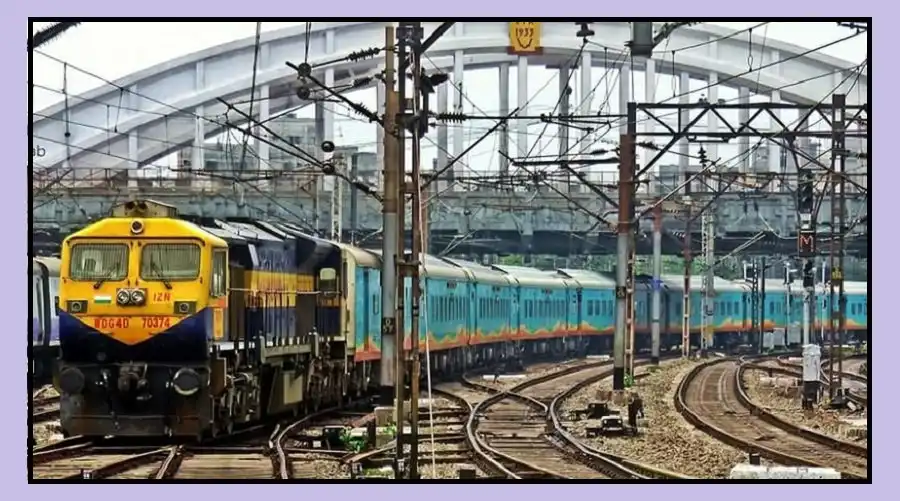

Indian Railways RAC ticket rules may change as the Railway authorities reportedly examine whether the decades-old Reservation Against Cancellation (RAC) system should be discontinued or revised.
The development could affect passengers who currently travel on shared berths after paying the applicable full ticket fare.
However, passengers should not assume that RAC tickets have been abolished. As of November 16, 2026, no final decision or official notification confirming the removal of the facility has been announced.
Indian Railways RAC Ticket Rules May Change: What Is Being Considered?
Under the existing RAC system, two passengers are generally allotted the same side-lower berth when confirmed berths are unavailable.
The arrangement allows both passengers to travel, but they have to share the available space.
During the day, the berth is used as seating accommodation. At night, both passengers share the sleeping space unless one of them receives a full berth after a vacancy becomes available.
The system can be uncomfortable, particularly during long-distance overnight journeys.
Concerns have also been raised about passengers paying the full applicable fare despite not receiving an individual sleeping berth.
Why Is the Railway Board Reviewing the RAC System?
Passenger convenience and the fairness of the fare structure are among the concerns behind the reported review.
The arrangement can also create difficulties for train ticket examiners when passengers request separate accommodation but no vacant berths are available.
Another concern arises when two unrelated passengers are allotted the same shared berth. These practical issues have renewed the debate over whether the current system needs to be changed.
The Railway authorities are reportedly examining the possibility of doing away with the arrangement. However, the exact nature of any proposed replacement has not been confirmed.
Parliamentary Panel Had Recommended Partial Refunds
The issue of charging full fares for shared accommodation had already been raised by Parliament’s Public Accounts Committee (PAC).
In its 36th report, tabled on February 4, 2026, the committee recommended that the Railway Ministry develop a mechanism to provide partial fare refunds to RAC passengers who do not receive an individual berth.
The recommendation brought attention to the difference between the fare paid by an RAC passenger and the accommodation actually received.
However, a committee recommendation does not automatically become a new railway rule.
How Does the Existing RAC Ticket System Work?
RAC stands for Reservation Against Cancellation. It is a reservation status that allows passengers to board a train even when a full berth is not immediately available.
If a confirmed passenger cancels a ticket or a berth becomes vacant, it may be allotted to an RAC passenger according to reservation priority.
As a result, an RAC ticket can become fully confirmed before departure or even during the journey.
This is different from a fully waitlisted e-ticket, which follows separate boarding rules if it remains waitlisted after chart preparation.
Will RAC Passengers Get Full Berths If the System Ends?
The impact of a possible change will depend on the alternative arrangement introduced by Indian Railways.
One possibility is that passengers without confirmed berths may remain on the waiting list instead of receiving shared accommodation.
However, this is only a possible outcome, not an officially confirmed proposal.
The Railways would also need to decide how vacant berths, cancellations and last-minute availability would be handled under any revised system.
What Should Train Passengers Do Now?
For now, passengers can continue booking and travelling under the existing RAC rules.
An RAC ticket permits travel with reserved seating accommodation, but it does not guarantee an individual sleeping berth.
Passengers should check their PNR status before departure and follow the applicable railway reservation and refund rules.
Any change to the system will depend on a formal announcement from the Ministry of Railways.
Until such an announcement is made, the existing RAC facility remains in operation.