
The Election Commission of India (ECI) has given thousands of left-out voters another opportunity to get their names included in the final electoral rolls during the ongoing Special Intensive Revision (SIR) exercise.
The decision will help eligible electors who were excluded from draft voter lists after being marked absent, shifted, dead or duplicate (ASDD).
The facility covers seven states and Union Territories: Delhi, Maharashtra, Haryana, Andhra Pradesh, Jharkhand, Telangana and Nagaland.
The Commission has introduced additional arrangements to help affected voters submit their enumeration forms and complete the process of getting their names restored.
Election Commission Gives Left-Out Voters Another Chance
The Election Commission issued fresh directions on November 6, 2026, allowing eligible electors who could not submit their enumeration forms within the original deadline to apply again.
The decision follows suggestions made by the Supreme Court during a hearing on October 28.
The court had asked the Election Commission to explore ways to ensure that eligible voters who were left out during the SIR process received another opportunity to establish their eligibility.
Under the revised arrangement, voters can submit their completed enumeration forms to the Electoral Registration Officer (ERO) or Assistant Electoral Registration Officer (AERO) responsible for their current ordinary residence.
The Commission has also instructed election officials to display booth-wise lists of excluded voters again.
These lists will mention the probable reasons for non-inclusion and will be available at polling stations and designated government offices.
They will also be uploaded to the websites of the respective Chief Electoral Officers.
How Can Left-Out Voters Submit Their Forms?
Voters who have not changed their residential address can submit their duly completed and signed enumeration forms along with an Annexure-B statement explaining why they missed the earlier submission deadline.
The documents can be submitted physically to the concerned ERO, AERO or Booth Level Officer (BLO). Voters can also send the required documents through family members instead of visiting the election office personally.
An online submission facility is also available through the ECINET platform, where eligible applicants can submit their enumeration forms using an electronic signature.
The Election Commission has instructed officials to make efforts to contact affected electors and help them complete the process.
Booth Level Officers have been asked to assist voters through house-to-house visits and other available communication channels.
These arrangements are intended to make the re-enrolment process easier for eligible voters who missed the earlier opportunity.
Voters Who Changed Address Get Special Relief
The Election Commission has also introduced a simplified procedure for voters who have shifted their residence within the same state.
Such voters do not need to submit Form 8 for this particular SIR process.
Instead, they can submit their enumeration form along with an Annexure-C statement mentioning their new residential address and Assembly constituency.
Applicants must also provide supporting address proof. The documents can be submitted to the ERO or AERO responsible for their new constituency.
This exemption is intended to reduce procedural difficulties for eligible electors who have relocated within their state but were unable to complete the earlier enumeration process.
However, voters must provide the required residential details and supporting documents so that election authorities can verify their eligibility and update the records correctly.
Form 6 Applicants Get Protection From Prosecution
Another important clarification concerns voters who were previously registered but found their names missing from the draft electoral rolls.
Some affected electors were concerned about submitting Form 6 because it is generally used for fresh voter registration.
The form includes a declaration related to first-time enrolment, creating uncertainty among people whose names had appeared in earlier voter lists.
The Election Commission has clarified that eligible voters will not face prosecution merely for submitting Form 6 in these circumstances.
This protection applies provided the applicant is not already registered in another Parliamentary or Assembly constituency and the declaration otherwise complies with the law.
The Commission has also clarified that voters who have already submitted Form 6 during the SIR exercise do not need to submit another enumeration form under the new arrangement.
Original Voter ID Numbers Will Be Restored
The Election Commission has further clarified what happens when an excluded voter successfully gets their name included in the final electoral roll.
After verification of the applicant’s eligibility and residential details, approved electors will be included in the final voter list.
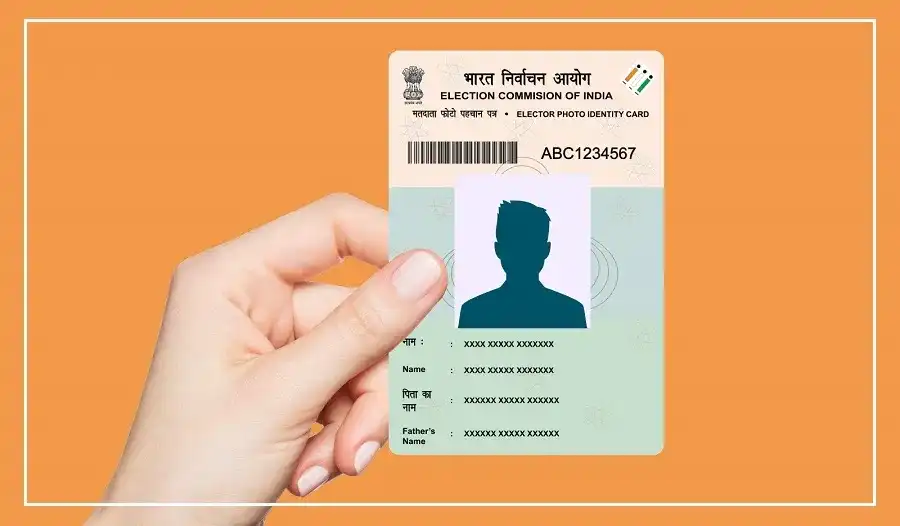
Their previously assigned Electors Photo Identity Card (EPIC) numbers will also be restored.
The applications submitted under the revised arrangement will be processed by election authorities under Rule 21(1) of the Registration of Electors Rules, 1960.
This means eligible voters who regain their place in the electoral rolls will not necessarily have to receive a completely new voter ID number.
The Commission has acknowledged the administrative challenges involved in handling large volumes of voter records and digitising electoral data.
It has reiterated the importance of including all eligible electors while preventing duplicate registrations.
What Should Affected Voters Do Now?
Eligible voters in the seven states and Union Territories should check the latest electoral roll information and confirm whether their names were excluded under the ASDD categories.
They can approach their local Booth Level Officer or the concerned Electoral Registration Officer to understand the applicable submission procedure.
They should keep their completed enumeration forms, address details and other required supporting documents ready.
The additional opportunity is particularly important for people whose names were excluded because their enumeration forms were not received within the original deadline.
The Election Commission’s revised arrangements aim to ensure that eligible citizens are not unnecessarily left out of the final electoral rolls because of missed forms or residential changes.