
Delhi-NCR Work From Home Rules will require government and private offices to limit physical attendance to 50% of their workforce from November 5 to November 20, 2026, as authorities prepare for worsening winter air pollution.
The Commission for Air Quality Management (CAQM) has issued the directive covering Delhi and five neighbouring National Capital Region (NCR) districts.
Under the arrangement, up to 50% of employees can attend offices physically, while the remaining workforce must work from home.
The decision is intended to reduce pollution caused by daily commuting during a period when Delhi-NCR traditionally experiences deteriorating air quality.
However, the order does not mean that every employee in Delhi-NCR will be required to work from home.
It introduces a 50% physical attendance limit, with exemptions for certain industrial establishments and essential services where remote working is not feasible.
Delhi-NCR Work From Home Rules: Which Areas Are Covered?
The CAQM directive applies to government and private offices in the following locations:
Delhi
Gurugram
Faridabad
Sonipat
Ghaziabad
Gautam Buddha Nagar (Noida)
The order was issued on October 30, 2026, and the specified arrangement will remain in force from November 5 to November 20.
Employers in the covered areas will have to organise their workforce so that no more than half of their employees attend the workplace physically.
The remaining employees will work remotely during this period.
Industrial establishments and essential services where such arrangements are not feasible have been exempted.
Is Work From Home Compulsory for Private Companies?
Yes, the CAQM directive covers both government and private offices in the specified locations. Private companies cannot treat the 50% attendance arrangement as merely an optional suggestion.
Employers will need to make appropriate arrangements for employees to work remotely while maintaining necessary business operations.
However, the order does not require all employees to remain at home simultaneously. Companies can organise shifts and attendance schedules within the permitted physical workforce limit.
The arrangement is particularly relevant for corporate offices, IT companies and other establishments that can operate with employees working remotely.
It is important to distinguish the new CAQM directive from Delhi’s separate winter pollution measures.
Delhi had already announced a 50% work-from-home arrangement for offices under its Winter Action Plan, covering a longer period from November 1, 2026, to January 31, 2027.
The fresh CAQM order extends the specified arrangement to five neighbouring NCR districts for November 5–20.
Construction and Demolition Work Also Restricted
Apart from office attendance restrictions, the CAQM has ordered restrictions on dust-generating demolition and outdoor construction activities throughout the entire NCR from November 5 to November 20.
The restrictions cover several activities, including:
Outdoor construction and demolition work.
Highway and road construction.
Flyovers and overbridge projects.
Power transmission line projects.
Pipeline construction.
Telecommunication infrastructure work.
However, certain essential projects have been exempted to prevent disruption to important public services.
These include projects related to Railways, Metro services, airports, inter-state bus terminals, hospitals, water supply and sanitation.
National security, defence-related activities and projects of national importance are also covered by the exemptions.
The construction restrictions apply across the NCR, which is a wider geographical area than the six locations specifically named in the office attendance directive.
Why Has the Government Ordered Work From Home?
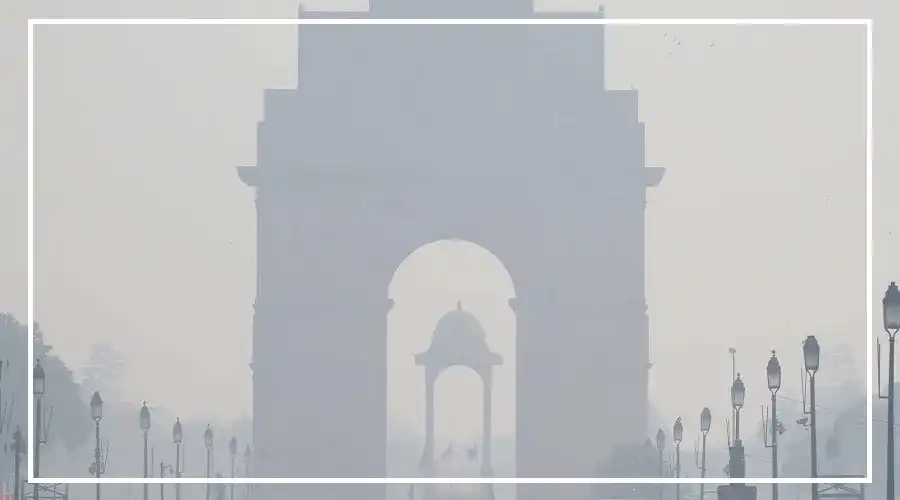
The decision has been taken ahead of the winter pollution season, when air quality in Delhi-NCR generally deteriorates during November.
The CAQM examined historical daily Air Quality Index (AQI) data from 2018 to 2025.
The analysis showed a recurring pattern of elevated pollution levels during early and mid-November, with the AQI reaching Severe and Severe+ categories on certain days.
Several factors contribute to the seasonal pollution problem.
These include vehicle emissions, agricultural residue burning, biomass burning, industrial pollution and construction dust.
Weather conditions also play an important role.
Low wind speeds, a shallow atmospheric boundary layer and reduced vertical mixing make it difficult for pollutants to disperse, allowing polluted air to accumulate near the ground.
By limiting daily office commuting and restricting dust-generating construction activities, authorities aim to reduce emissions before pollution levels reach their seasonal peaks.
The directions have been issued under Section 12 of the Commission for Air Quality Management in National Capital Region and Adjoining Areas Act, 2021.
What Should Employees and Employers Do?
Employees working in the affected areas should check their company’s revised attendance arrangements before November 5.
Employers will need to coordinate work schedules and ensure that physical attendance remains within the prescribed limit.
People working in essential services and exempted industrial establishments should follow the applicable instructions issued by their organisations.
The November 5–20 restrictions are temporary and preventive. Their continuation or modification will depend on subsequent directions from the authorities.
For now, the order makes work-from-home arrangements an important part of Delhi-NCR’s efforts to control winter air pollution while also restricting construction-related dust across the region.