
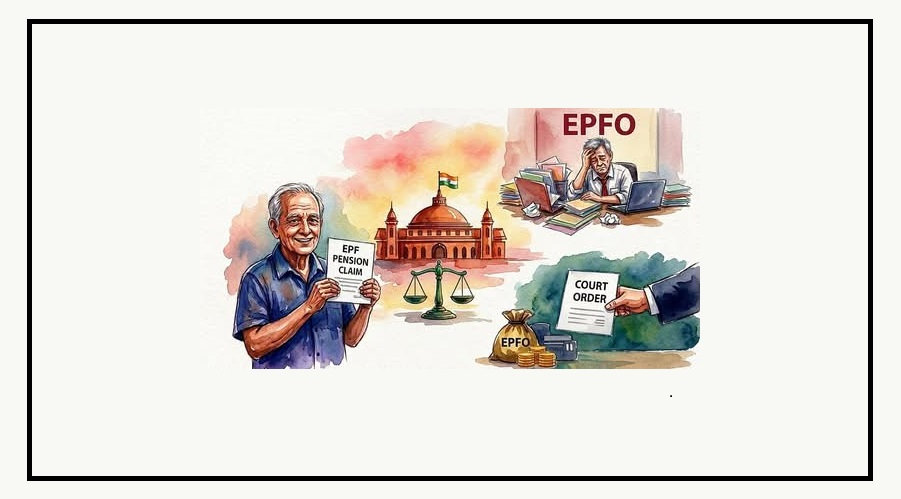

In a big win for employees, the Bombay High Court has ruled that the Employees’ Provident Fund Organisation (EPFO) cannot reject higher pension claims just because employer records are missing or incomplete.
The decision, delivered on April 18, 2026, brings major relief to thousands of workers struggling with pension approvals.
Employees Should Not Pay for Employer Mistakes
The court made a clear point—employees cannot be punished for errors made by their employers.
In many cases, EPFO had denied higher pension claims due to missing documents like Form 6A or incomplete contribution records.
But the court said maintaining these records is the employer’s responsibility, not the employee’s.
Shifting that burden onto workers is unfair, especially when they have no control over such documentation.
EPFO Can’t Reject Claims Automatically
The court also criticised EPFO for rejecting applications without proper checks.
It said claims should not be denied “mechanically” just because some documents are missing.
Instead, officials must carefully review each case and verify details using other available evidence.
Rejection should be the last step—not the default response.
Pension Laws Must Help, Not Hurt
Highlighting the purpose of pension laws, the court reminded authorities that these are welfare measures meant to support employees.
That means rules should be applied in a practical and fair way—not used to block genuine claims over minor technical issues.
Other Proofs Must Be Accepted
If employer records are missing, EPFO has been told to look at alternative documents.
This can include salary slips, PF statements, or any other proof submitted by employees.
If employers don’t cooperate, EPFO must take extra steps to verify the information instead of putting all the pressure on applicants.
A Big Relief for Thousands
This ruling could help thousands of employees who opted for higher pension based on their actual salary but were denied due to paperwork gaps.
Many had contributed more than the required limit but couldn’t prove it because their employer records were incomplete.
Now, those cases may get a fresh review.
A Strong Message Going Forward
The judgement sends a clear signal—administrative failures cannot be used to deny rightful benefits.
It is likely to push EPFO to follow a more transparent and employee-friendly approach while handling pension claims in the future.