
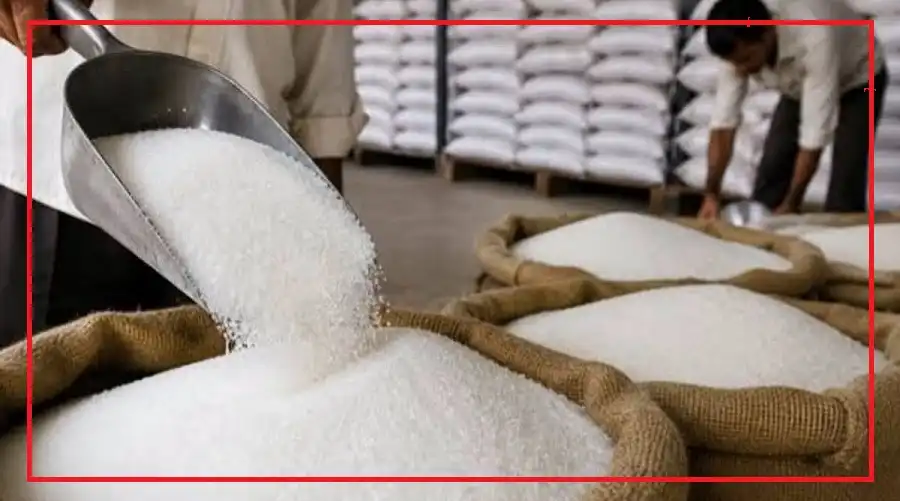

Raw Sugar Import Quota applications have reopened, giving eligible sugar millers and refiners another opportunity to secure duty-free imports under the government’s Tariff Rate Quota (TRQ) scheme.
The Directorate General of Foreign Trade (DGFT) has made 2,15,043.859 metric tonnes of raw sugar available for fresh allocation.
The one-time application window will remain open until November 27, 2026.
Eligible applicants must submit their applications online through the DGFT website and meet the existing eligibility and documentation requirements.
The decision comes as India faces concerns over lower domestic sugar production and rising prices.
The government is seeking to utilise the remaining quantity under the original 10-lakh-tonne import quota announced in August 2026.
Raw Sugar Import Quota: How Much Is Available?
According to the DGFT’s latest public notice, a total of 2,15,043.859 tonnes of raw sugar is available for fresh allocation under the TRQ scheme.
This quantity consists of two components. The first is 1,87,550 tonnes that remained unallocated from the original quota of 10 lakh tonnes.
The second is 27,493.859 tonnes surrendered by applicants who had previously received allocations.
The government had already allocated 8,12,450 tonnes to eligible sugar millers and refiners under the original quota.
The fresh allocation window is intended to make the remaining quantity available to businesses capable of processing imported raw sugar into white or refined sugar.
Who Can Apply for the Fresh Sugar Import Allocation?
The opportunity is not open to every importer or trader. Only eligible sugar millers and refiners with their own functional facilities for converting imported raw sugar into white or refined sugar can apply.
Applicants must follow the eligibility conditions and documentation requirements specified in the earlier DGFT public notice dated August 20, 2026, along with its subsequent corrigendum.
Applications must be submitted online through the official DGFT website under the following section: Import Management System – Tariff Rate Quota (TRQ).
The authorities will continue to follow the existing allocation procedures and conditions. Applicants should carefully check the prescribed requirements before submitting their applications.
November 27 Is the Last Date to Apply
The government has kept the fresh application window open until November 27, 2026. This is a one-time opportunity for eligible millers and refiners seeking allocation from the remaining import quota.
The latest decision follows an earlier extension of the validity period for duty-free raw sugar imports. The original deadline of October 31, 2026, was extended by two months to December 31, 2026.
This means the fresh application process and the validity of the import quota have separate deadlines.
November 27 is the last date for submitting applications, while December 31 is the extended validity date for the overall TRQ import arrangement.
Applicants should not confuse the two dates when planning their import and processing activities.
Why Has the Government Opened Another Import Window?
The government initially announced the 10-lakh-tonne duty-free raw sugar import quota in August 2026 to help augment domestic supplies.
The latest decision allows the authorities to utilise the quantity that remained unallocated or was subsequently surrendered by previous beneficiaries.
Domestic sugar prices had touched record highs amid concerns about supply availability.
Demand for sugar generally increases during the August-November period, which coincides with major Indian festivals such as Ganesh Chaturthi, Dussehra and Diwali.
Meanwhile, domestic sugar production estimates for the 2025-26 marketing year, which runs from October to September, have been reduced to 306 lakh tonnes from the earlier projection of 343 lakh tonnes.
The lower production estimate has added to concerns about domestic availability and the importance of managing supplies.
The additional allocation could provide eligible sugar processors with another opportunity to import raw sugar without customs duty under the specified quota arrangement.
However, the actual impact on domestic prices will depend on imports, processing and the availability of sugar in the market.