
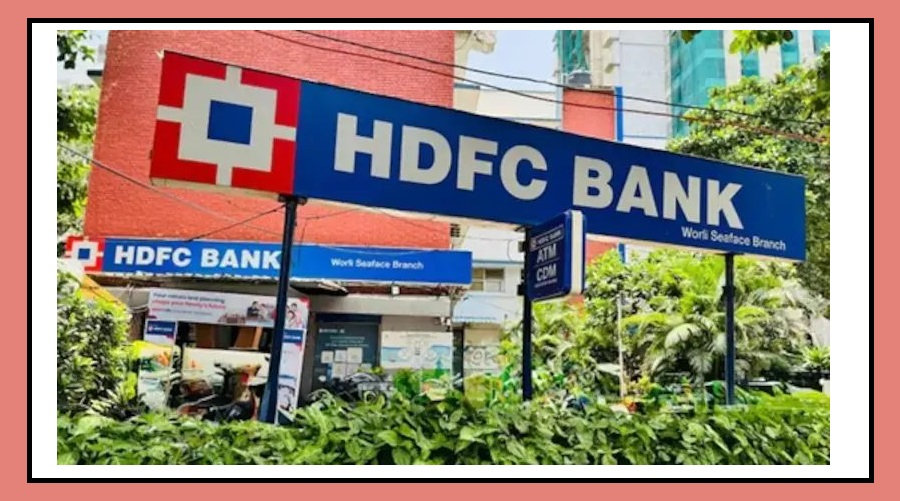

HDFC Bank has changed its loan interest rates, bringing both relief and concern for customers.
While some loan rates have become cheaper, others have become more expensive. The biggest change is in the bank’s 3-year MCLR rate, which has gone up by 0.05%.
This change could affect customers whose home loans or long-term loans are linked to the MCLR system.
3-Year Loan Rate Increased
The bank has increased its 3-year Marginal Cost of Funds Based Lending Rate (MCLR) from 8.55% to 8.60%. Because of this, customers with loans linked to the 3-year MCLR may have to pay higher EMIs in the coming months.
At the same time, the bank has reduced some short-term MCLR rates by 0.05%, giving relief to certain borrowers.
Latest HDFC Bank MCLR Rates
| Loan Tenure | Old Rate | New Rate | Change |
|---|---|---|---|
| Overnight / 1 Month | 8.10% | 8.05% | Cheaper by 0.05% |
| 3 Months | 8.20% | 8.15% | Cheaper by 0.05% |
| 6 Months | 8.35% | 8.30% | Cheaper by 0.05% |
| 1 Year | 8.35% | No Change | Stable |
| 2 Years | 8.45% | No Change | Stable |
| 3 Years | 8.55% | 8.60% | Costlier by 0.05% |
Who Will Be Affected?
Customers whose home loans are linked to the 1-year MCLR will not see any change in their EMI because the bank has kept this rate unchanged at 8.35%.
However, customers with loans linked to the 3-year MCLR may see their EMIs increase slightly due to the higher interest rate.
The bank also said that personal loan rates for new customers currently start from 10.9%.
Importantly, customers with fixed-rate loans will not be affected by these changes.
What Is MCLR?
MCLR stands for Marginal Cost of Funds Based Lending Rate. It is the minimum interest rate below which banks cannot offer loans.
If a bank increases its MCLR, loan interest rates and EMIs can also increase. If the MCLR comes down, borrowers may get lower EMIs.
The Reserve Bank of India introduced the MCLR system in 2016 to make loan pricing more transparent and ensure customers benefit from interest rate changes.
Since October 2019, most new loans are linked to the External Benchmark Lending Rate (EBLR), which is directly connected to the RBI repo rate.