
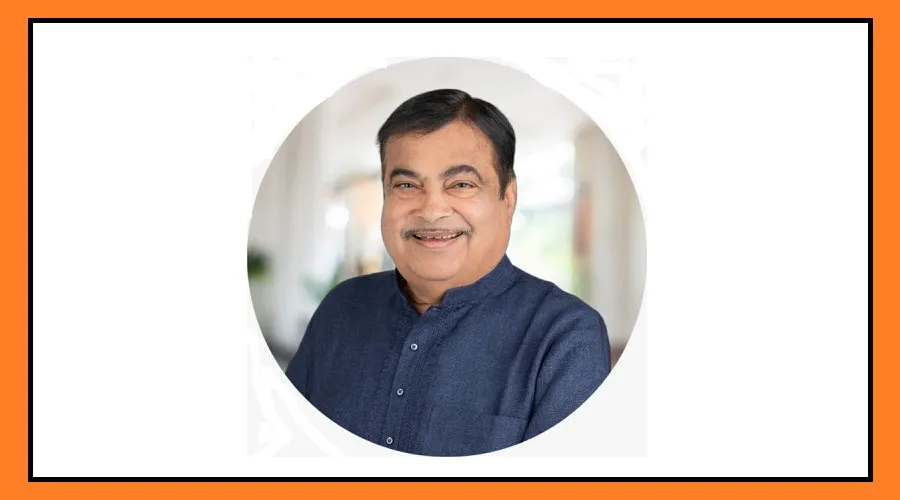

Nitin Gadkari Speeding Challan Rule has attracted attention from Indian motorists after Union Road Transport and Highways Minister Nitin Gadkari said that drivers should not receive speeding challans for exceeding the applicable expressway speed limit by up to 20%.
The statement could mean a higher challan threshold for vehicles travelling on India’s expressways.
Speaking at the Confederation of Indian Industry’s (CII) National Conference on Highways of India’s Future, Gadkari said he had instructed officials not to issue speeding notices within the specified margin.
His remarks have raised questions about whether motorists can now drive faster without receiving automated traffic challans.
However, there is an important distinction between a challan enforcement threshold and the legally prescribed speed limit.
The minister’s statement does not automatically change the existing speed limits, and motorists should continue following road signs and applicable traffic regulations.
What Is the Nitin Gadkari Speeding Challan Rule?
Gadkari said that authorities had been instructed to avoid issuing speeding notices to motorists travelling at speeds of up to 120 kmph on expressways.
He also mentioned an additional 20% margin above that threshold.
For an expressway with a prescribed speed limit of 120 kmph, the calculation would be:
Existing speed limit: 120 kmph
Additional 20% margin: 24 kmph
Potential challan threshold: 144 kmph
This means that, under the approach described by the minister, vehicles travelling up to 144 kmph on a 120 kmph expressway could potentially avoid speeding notices.
However, this should not be interpreted as permission to drive at 144 kmph. The applicable legal speed limit remains unchanged unless the competent authority formally revises it.
The implementation of the proposed enforcement approach across different highways and automated challan systems also needs clarification.
Does the 20% Margin Apply to All Indian Roads?
No. Gadkari’s remarks were specifically made in the context of expressway speeding enforcement.
They do not establish a nationwide exemption for every highway, city road or residential street.
Speed limits in India depend on the category of road and vehicle.
Under the existing central speed-limit framework, the maximum prescribed speed for eligible passenger cars on access-controlled expressways is 120 kmph.
For four-lane and above divided carriageways, the maximum is generally 100 kmph, while other roads have lower prescribed limits.
State authorities and relevant road agencies can also impose restrictions based on local conditions.
Therefore, motorists travelling on roads with lower speed limits should not assume that they can automatically exceed those limits by 20% without consequences.
The distinction is particularly important for drivers using national highways, state highways and urban roads, where applicable speed restrictions can differ considerably.
Are Speeding Challan Rules Officially Changed?
Gadkari’s statement indicates that he has instructed officials to adopt a more flexible approach towards speeding enforcement on expressways.
However, questions remain about how the instruction will be implemented through existing traffic enforcement systems.
The current Motor Vehicles Rules provide a limited tolerance of up to 5% above the notified speed limit for the relevant challan exemption.
A 20% relaxation would therefore require clarity on its compatibility with the existing legal framework.
There are also questions about whether automated speed cameras and electronic challan systems have been updated to reflect the minister’s instructions.
Until the government issues the necessary formal clarification or changes, motorists should not treat the 20% margin as a guaranteed legal exemption from speeding penalties.
AI-Based Traffic Monitoring System Also Planned
Apart from discussing speeding challans, Gadkari also called for industry support in implementing an AI-based Advanced Traffic Management System (ATMS) across India’s highway network.
The proposed system aims to improve highway monitoring and identify traffic violations through technology.
It could help authorities detect unsafe driving practices, including lane-discipline violations.
With India continuing to expand its expressway and national highway network, technology-based traffic monitoring is expected to become increasingly important for enforcement and road safety.
However, the proposed AI-based monitoring system and the 20% speeding margin are separate developments.
There has been no confirmation that all automated enforcement cameras have been updated to incorporate the additional tolerance.
What Should Indian Motorists Do Now?
Motorists should continue following the speed limits displayed on expressways and other roads.
They should not increase their driving speed simply because of the minister’s statement about a possible challan tolerance.
Driving at higher speeds increases the distance required to stop a vehicle and can make it harder to respond to sudden obstacles, traffic congestion or unexpected lane changes.
Road conditions, visibility, weather and vehicle condition also influence driving safety.
Even on modern expressways, maintaining a safe speed and following lane discipline remain essential.
The minister’s remarks could bring changes to speeding enforcement, but motorists should wait for clear implementation guidelines before assuming that the additional 20% margin is applicable everywhere.