

TheBankTodayTheBankTodayTheBankToday
Notification Show More
Font ResizerAa
  • Home
  • Banking
  • SBI
  • ATM Card
  • NEFT/UPI
  • Central Bank
  • Important
Reading: SEBI Proposes Major Changes to Mutual Fund Fees
Share
Font ResizerAa
TheBankTodayTheBankToday
  • Home
  • Banking
  • SBI
  • ATM Card
  • NEFT/UPI
  • Central Bank
  • Important
Search
  • Home
  • Banking
  • SBI
  • ATM Card
  • NEFT/UPI
  • Central Bank
  • Important
Have an existing account? Sign In
Follow US

Home » Important

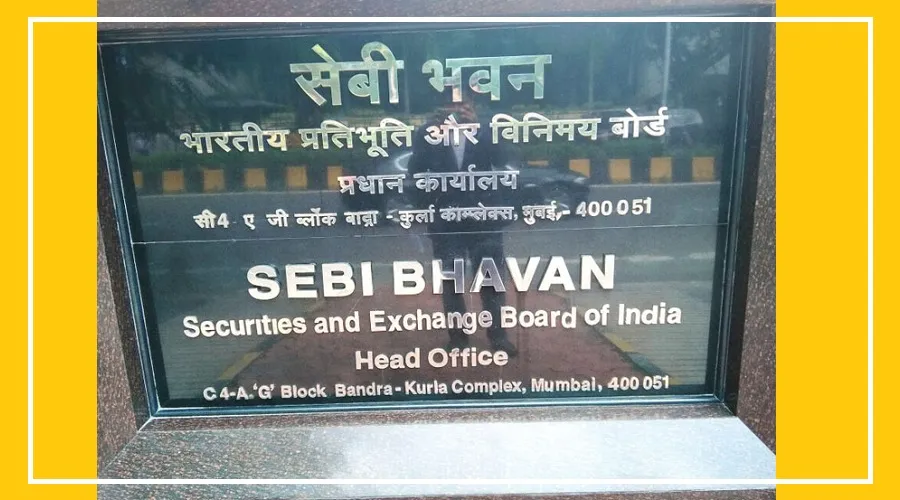
Sebi Logo result
Important

SEBI Proposes Major Changes to Mutual Fund Fees

Takendra Verma
Last updated: 29/10/2025 2:24 PM
Takendra Verma
Published: 29/10/2025
Share
SHARE

The Securities and Exchange Board of India (SEBI) has introduced a new proposal aimed at reducing mutual fund expenses and improving transparency in fee structures.

Contents
Reduction in Total Expense Ratio (TER)Stricter Rules on Brokerage and New Fee StructureHow Investors Will BenefitAnalysts’ Take

According to a consultation paper released on Tuesday, all fund houses will now be required to clearly disclose the complete details of charges levied on investors.

Reduction in Total Expense Ratio (TER)

SEBI has proposed a cut in the Total Expense Ratio (TER) — up to 0.15% for open-ended mutual funds and up to 0.25% for closed-end schemes.
However, brokerage, taxes, and transaction costs will be excluded from these charges and will instead be shown separately.

This proposal differs from SEBI’s 2023 framework, which had suggested including all such expenses within the TER. That earlier plan faced opposition from asset managers, who currently handle assets worth around ₹75.61 trillion (about $860.23 billion).

Stricter Rules on Brokerage and New Fee Structure

SEBI has also recommended reducing brokerage fees.

In the cash market, brokerage could drop from 12 basis points to 2 basis points.

For derivative transactions, it may be reduced from 5 basis points to 1 basis point.

Additionally, SEBI has allowed performance-linked differential fee structures, meaning asset managers can charge fees based on fund performance.

Fund houses must also ensure that any non-mutual fund business is operated as a separate entity, with distinct roles for key employees.

How Investors Will Benefit

Lower mutual fund fees will directly help investors save more.
For example, if an investor puts ₹10 lakh in a mutual fund with a current TER of 1.75%, a reduction of 0.15% to 0.25% would mean:

₹1,500 saved per ₹10 lakh (0.15% reduction)

₹2,500 saved per ₹10 lakh (0.25% reduction)

Though the savings seem small, over 15–20 years, compounding could add up to an extra ₹50,000 to ₹1 lakh in returns.

Separately showing brokerage, taxes, and transaction costs will give investors a clear view of the actual expenses, leaving no room for hidden charges.

The performance-linked fee model also ensures that fund managers earn more only when investors profit, aligning their interests.

Analysts’ Take

Market experts believe these proposals could pressure AMC (Asset Management Company) stocks in the short term, as lower fees may reduce revenues and margins.

However, in the long run, the move will greatly benefit investors by promoting transparency, fairness, and accountability.

The performance-linked fee model will motivate fund managers to deliver better returns, while enhancing investor trust and governance across the mutual fund industry.


You Might Also Like

IndiGo launches “Splash into Savings” Sale
Senior Citizens Can Earn ₹20,500 Monthly with SCSS
LIC to Enter Health Insurance Sector Soon
Draft Tax Rules outline Consequences of PAN issues
Enbee Trade announces 10:1 Stock Split
Share This Article
Facebook Email Print
Leave a Comment

Leave a Reply Cancel reply

Your email address will not be published. Required fields are marked *

Difference Between NEFT and RTGS

Get Latest Updates

Important banking and money updates, delivered without the clutter.
Thank you! You are subscribed. Please check your inbox for the welcome email.

Popular Updates

rbi6
FD Investors may get Higher Interest after RBI Hike
06/10/2026
gst
Wrong ITC Claim Under GST Can Cost More
06/10/2026
epfo.1
EPFO Members should Know this before Withdrawing PF
05/10/2026
aadhaar
Aadhaar Name Update Rules Changed: New Affidavit Process
05/10/2026
rbi5
Savings Account Minimum Balance Rules Changed
03/10/2026

Tags

  • Central Bank Of India
  • Pan Card
  • register mobile number
  • pan card new rule
  • Banking Service
  • HDFC
  • SBI Personal Loan
  • Net Banking
  • Activate Net Banking
  • What is Bank?

TheBankToday

TheBankToday publishes practical banking, personal-finance and financial-news explainers to help readers understand important updates and services.
Quick Links
  • About
  • Contact Us
  • Disclaimer
  • Join Us
  • T&C
  • Privacy Policy
  • Customize Interests
Important Links
  • Advertise With Us
  • Advertising Policy
  • Cookie Policy
  • Corrections Policy
  • Editorial Policy
  • Fact-Checking Policy
  • Grievance Redressal

Subscribe Us

Subscribe to our newsletter to get our newest articles instantly!

Thank you! You are subscribed. Please check your inbox for the welcome email.
© 2026 TheBankToday. All Rights Reserved.
Welcome Back!

Sign in to your account

Username or Email Address
Password

Lost your password?