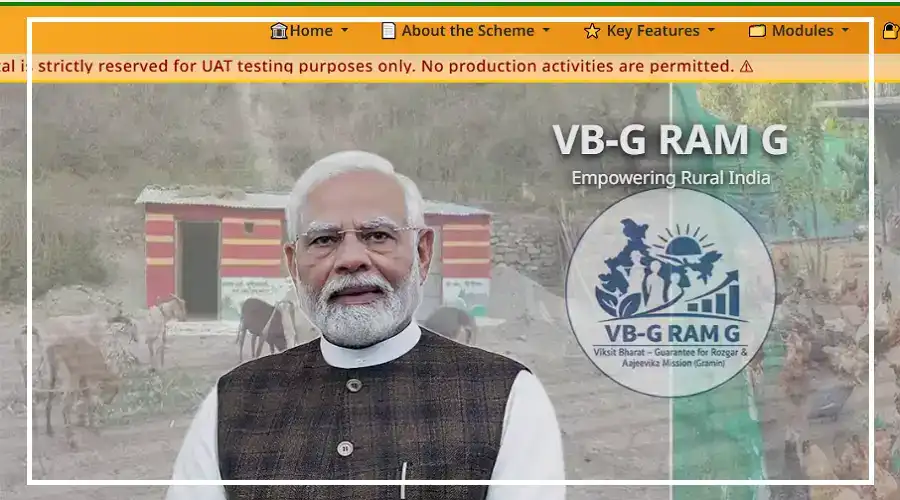

The VB-G RAM G Ombudsperson Guidelines have been issued by the Ministry of Rural Development to strengthen accountability and protect the rights of rural workers.
Under the new framework, dedicated district-level Ombudspersons will handle complaints related to job cards, employment, delayed wages, workplace facilities and denial of government scheme benefits.
The guidelines, announced on November 18, 2026, aim to make grievance redressal more accessible and transparent.
They also introduce stronger digital monitoring, regular field visits and greater public participation to ensure that complaints from rural citizens receive proper attention.
What Are the New VB-G RAM G Ombudsperson Guidelines?
The Ministry of Rural Development has introduced guidelines for Ombudspersons and Appellate Authorities under the Viksit Bharat – Guarantee for Rozgar and Ajeevika Mission (Gramin), commonly known as VB-G RAM G.
The Ombudsperson will act as an independent grievance-handling authority at the district level, providing rural workers with a mechanism to raise concerns about the implementation of the programme.
The guidelines cover complaints involving job cards, employment opportunities, wage payments, delay compensation, worksite facilities, muster rolls and denial of statutory entitlements.
Complaints involving discrimination, harassment and violations of workers’ rights will also come under the framework.
Special attention will be given to concerns affecting women and vulnerable sections of rural communities.
Which Complaints Can Rural Workers Report?
The new mechanism is intended to address several problems that workers may encounter while accessing employment and benefits under the rural employment programme.
Workers can approach the district-level Ombudsperson regarding issues such as:
Job card-related irregularities.
Denial of employment opportunities.
Delayed wage payments.
Non-payment of delay compensation.
Problems involving facilities at worksites.
Irregularities in muster rolls.
Denial of statutory benefits.
Discrimination, harassment and violations of workers’ rights.
The mechanism is intended to provide an accessible route for rural citizens to report implementation-related problems and seek appropriate redressal.
Digital Platform to Track Complaints and Action Taken
One of the important changes under the new guidelines is the introduction of a dedicated digital platform for Ombudspersons.
The platform will facilitate online registration and tracking of complaints. It will also support the recording of proceedings, uploading of awards and monitoring of action taken by the concerned authorities.
This digital system is expected to improve transparency by making it easier to monitor complaints from registration to their final disposal.
The guidelines also introduce stronger documentation requirements during field visits. Geo-tagged and time-stamped photographs will help maintain records and improve the traceability of inspections.
These measures are intended to reduce gaps in monitoring and strengthen accountability in the implementation of the programme.
Ombudspersons Must Attend Three Public Hearings Every Month
The government has also strengthened the role of social audits and community participation under the new framework.
Ombudspersons will be required to attend at least three Social Audit public hearings or Gram Sabhas every month.
These meetings will provide opportunities for rural residents to raise concerns directly and bring implementation-related problems to the attention of the authorities.
Social audit findings and feedback from local communities will also help identify discrepancies and support corrective action under the prescribed procedures.
The approach is designed to ensure that accountability does not remain limited to online complaints and official records. Direct interaction with rural communities will also play an important role.
Who Can Become an Ombudsperson?
The new guidelines have expanded the pool of eligible candidates for appointment as Ombudspersons.
Individuals with professional experience in rural development, public administration, law, academics, social work and management can be considered under the expanded eligibility framework.
The government has also revised provisions relating to tenure and remuneration to support continuity and improve the functioning of these authorities.
The emphasis on professional experience is intended to strengthen the ability of Ombudspersons to understand administrative issues, examine complaints and address concerns raised by rural workers.
How the New Rules Strengthen Rural Workers’ Rights
The Ombudsperson and Appellate Authority framework is part of a broader effort to improve transparency and accountability under VB-G RAM G.
Other measures include digital monitoring, public disclosure and social audits.
Together, these mechanisms are intended to strengthen oversight and make programme implementation more responsive to rural households.
The government had also notified separate VB-G RAM G Grievance Redressal Rules, 2026, which provide a multi-level complaint mechanism at the Gram Panchayat, Block and District levels.
Those rules prescribe completion of enquiries within seven working days and resolution of grievances within 15 days.
For rural workers, the latest guidelines are significant because they provide additional institutional support for raising complaints about employment, wages and other statutory entitlements.
The effectiveness of the framework will depend on its implementation at the district level, accessibility of complaint mechanisms and timely action by the concerned authorities.