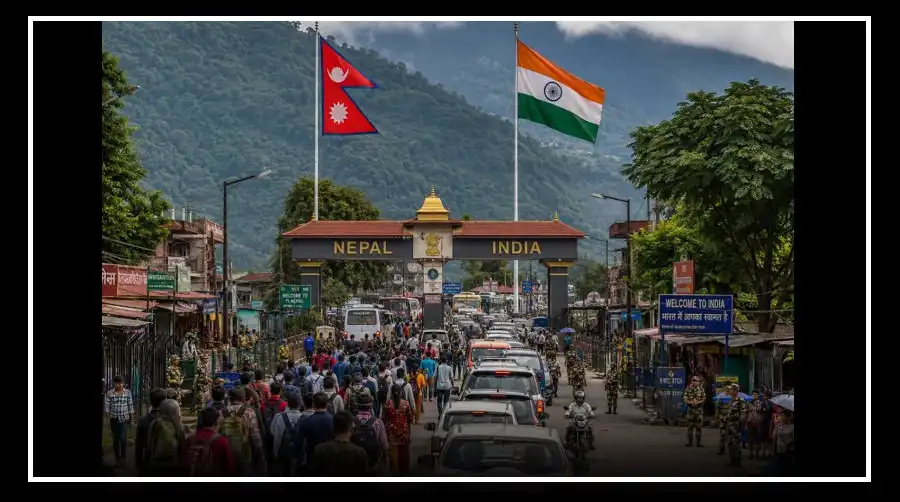

India Nepal Bhutan travel rules have changed after the Ministry of Home Affairs (MHA) amended the immigration exemption order on November 5, 2026.
Indian citizens travelling to Nepal or Bhutan, or returning to India from either country, must now produce an identity document specified in the government’s Visa Manual.
The requirement applies to travel by both road and air. Immigration officers can ask travellers to establish their identity and provide additional information during border checks.
The revised provisions also clarify when a passport becomes compulsory, particularly for people using Nepal or Bhutan as transit points to reach another country.
India Nepal Bhutan Travel Rules: What Documents Are Required?
Under the amended Immigration and Foreigners (Exemption) Order, 2026, Indian citizens travelling between India and Nepal or Bhutan must carry at least one identity document listed in the Visa Manual.
The same requirement applies to Nepalese and Bhutanese citizens entering or leaving India by land or air. Travellers must also provide any information requested by immigration officers.
The amendment does not mean that every government-issued identity card will automatically be accepted.
The specific documents must meet the requirements mentioned in the Visa Manual and the destination country’s entry rules.
For Indian citizens travelling to Nepal by air, the Embassy of India in Kathmandu lists a valid Indian passport or an original Voter ID card issued by the Election Commission of India with a photograph as acceptable documents.
Downloaded or printed online copies of the Voter ID are not accepted. Aadhaar, PAN cards and driving licences are also not accepted as substitutes for these documents for air travel to Nepal.
For Bhutan, Indian nationals can obtain an entry permit by presenting an original valid passport or Voter Identity Card, according to the country’s published immigration guidance.
When Is a Passport Mandatory?
The exemption from the passport requirement is limited to travel between India, Nepal and Bhutan. It does not cover Indian citizens using either neighbouring country as a route to reach a third country.
For example, an Indian citizen travelling from India through Nepal to another international destination cannot rely on the identity-document exemption for the onward journey. A valid passport is compulsory in such cases.
The traveller must also enter or leave India through a designated immigration post. This requirement is important for people planning international journeys that involve crossing the India-Nepal or India-Bhutan land borders.
Nepalese and Bhutanese citizens travelling to or from countries other than Nepal and Bhutan must also carry a valid passport.
An additional condition applies if they have embarked at or travelled through China, Macau, Hong Kong or Pakistan. In such cases, they must possess both a valid passport and a valid visa.
Other Exemptions Under the Amended Order
The amended order retains certain exemptions from passport, travel-document and visa requirements for specified categories of people, subject to the conditions mentioned in the notification.
These include Indian Navy, Army and Air Force personnel travelling on official duty. Their family members are also covered when accompanying them on government transport.
Certain registered Sri Lankan Tamil nationals who took shelter in India on or before January 9, 2015, are included.
The provisions also cover specific foreign crew members of military vessels visiting India for repairs with the required permits, and certain Tibetan nationals who entered India through designated procedures and registered with the authorities.
The order also provides an exemption for members of six minority communities from Afghanistan, Bangladesh and Pakistan: Hindus, Sikhs, Buddhists, Jains, Parsis and Christians.
It applies to those who entered India on or before December 31, 2024, after being compelled to seek shelter because of religious persecution or fear of persecution.
Those covered may have entered without valid travel documents or with documents that were valid at the time but have since expired.
They must still obtain the appropriate category of visa for their continued stay in India.
What Travellers Should Check Before Leaving
The revised rules make it important for travellers to check their documents and route before starting a journey.
People visiting Nepal or Bhutan directly should confirm which original identity documents are accepted for their mode of travel.
Those planning to continue to another country through Nepal or Bhutan should carry a valid passport and use the designated immigration posts when entering or leaving India.
The amendment was issued under Section 33 of the Immigration and Foreigners Act, 2025.
Travellers should check the latest official immigration guidance and destination-specific entry requirements before booking tickets, rather than assume that an Aadhaar card or another commonly used identity document will be sufficient.